Featured
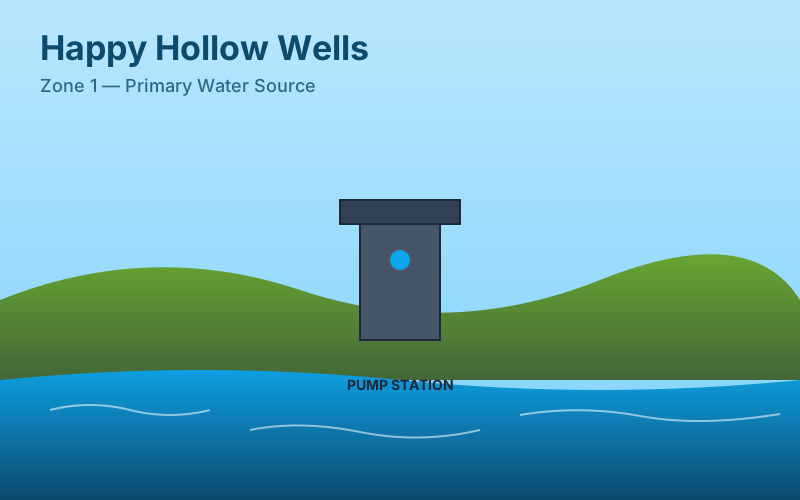
Happy Hollow Wells Zone 1
The Happy Hollow wellfield is Wayland's primary water source, providing clean drinking water to thousands of residents. Established in the 1960s with a 2.5 million gallon daily capacity.
A visual tour of the wellfields, treatment plants, and monitoring systems that delivered clean drinking water to Wayland residents.
The Happy Hollow wellfield is Wayland's primary water source, providing clean drinking water to thousands of residents. Established in the 1960s with a 2.5 million gallon daily capacity.
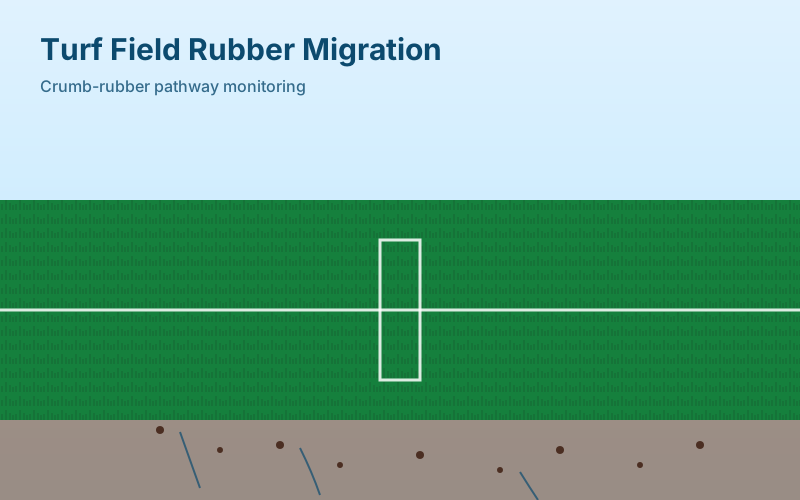
Monitoring rubber particles from artificial turf fields that may impact groundwater quality and tracing potential contamination pathways.
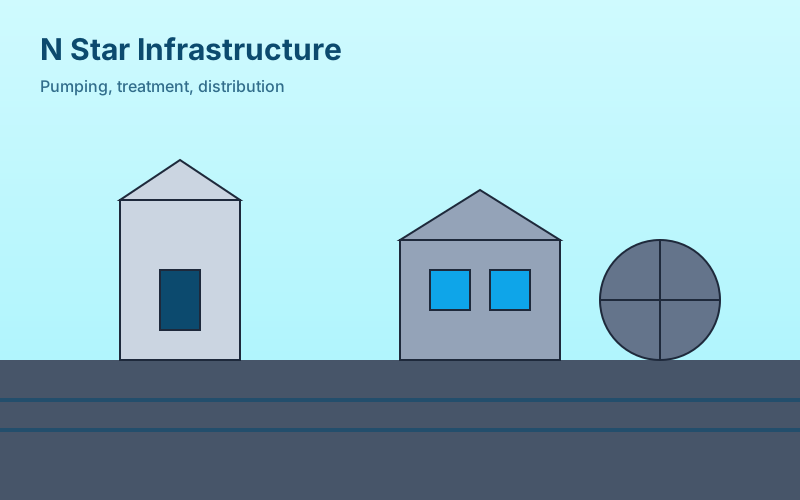
Pumping stations, treatment facilities, and the distribution networks that moved water from the wellfield to the tap.
Continuous laboratory analysis covering more than 80 chemical parameters — from bacterial contamination to PFAS compounds and heavy metals.
Roughly 150 acres of watershed land protected through zoning, easements, and land-use controls that shield the wellfield's recharge area.
Granular activated carbon (GAC) treatment achieving greater than 99% PFAS removal efficiency, brought online in 2023.
Automated sensors recording water quality readings at 15-minute intervals with alerts for any out-of-range values.
The story of Wayland's water system spans more than six decades — the original wellfield, the protective measures built up around it, and the contaminants the town learned to detect and remove.